The Email We Send Before Every Trip (And Why It’s Our Best-Kept Secret)
At one of our favorite lodges, before we’d even unpacked, the culinary team followed up on our dietary notes with a question no property had ever led with: “What kind of food do you like?”
Not what can’t you eat. What do you love.
That’s the entire difference between a kitchen that tolerates you and one that’s about to spoil you rotten. To be fair, that lodge is exceptional and they’d asked for our preferences well ahead of arrival. We knew they were always going to look after us, and they’re one of the reasons we know what the gold standard even looks like.
The problem is that most properties are not that lodge.
You’re not just paying for the thread count. You’re paying for attention to detail, and a surprising amount of it is available on request, not automatic.
Why we send a detailed pre-arrival email
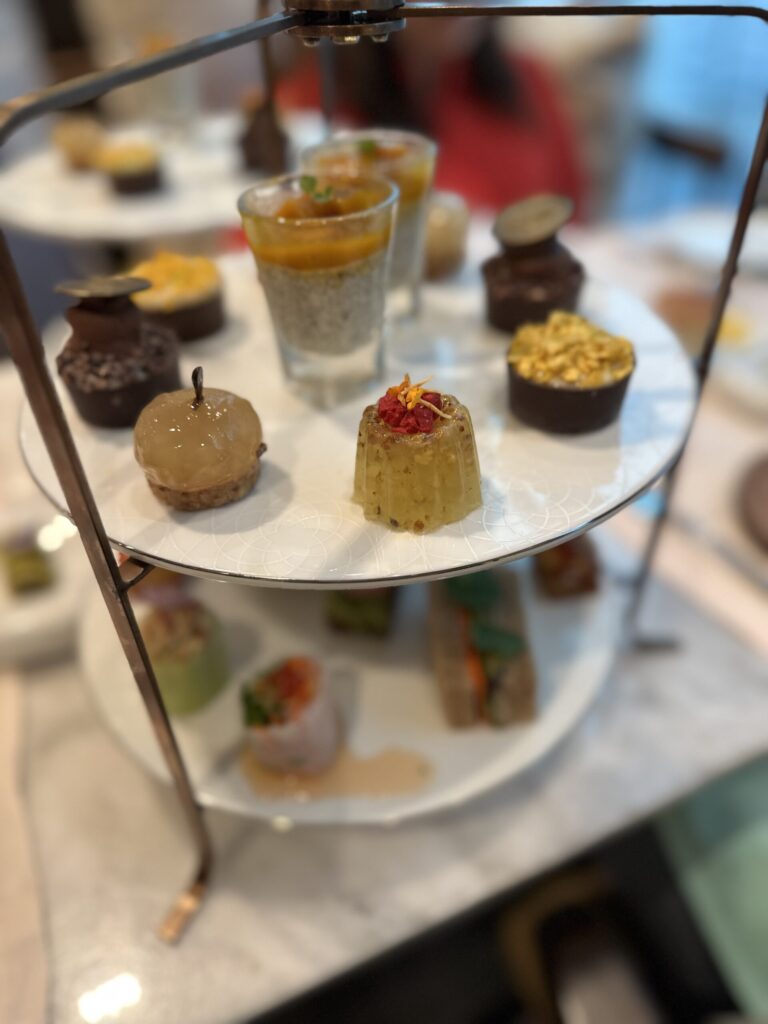
Some hotels never ask. Some ask, and the answer quietly dies somewhere between the booking system and the kitchen. Too many times, we’ve been welcomed by a team who recited our preferences perfectly at check-in and minutes later in our room we found delicious looking pastries that were (very unfortunately) not suitable for us. We watched sadly as the in-room dining staff replaced those beautiful pastries with –> fruit. Now, I have nothing against fruit, I eat it most days for breakfast, in-fact. However, on vacation (when I ease up on counting calories), I much prefer a strawberry shortcake to just a strawberry.
The email doesn’t create a great kitchen. It removes the excuses. It’s a written, specific record, sent early enough to reach everyone who needs it.
That matters most somewhere remote. A city hotel that gets it wrong can send a runner to a shop. A lodge in the bush or an island resort cannot: ingredients arrive on a schedule, and if nobody flagged your needs before the delivery, the answer for the week is simply no. The more spectacular and far-flung the destination, the less room there is to improvise. So, be wise, and help the team prepare for your palate ahead of time.
And here’s the thing about luxury travel
You are not just paying for the thread count. You can get a very nice bed for a quarter of the price.
What you’re actually paying for is attention to detail! In other words, the personalization layer. That’s what separates a Four Seasons from a perfectly lovely hotel down the street. But here’s what nobody says out loud: a lot of that personalization is available on request, and weirdly not automatic. Some teams are wonderfully proactive. Many aren’t.
Which is why two people can stay at the same property in the same week and one leaves saying it was the trip of a lifetime while the other shrugs and says it was fine.
If you don’t tell them who you are and what you need, you’re paying full price for the bed and leaving the rest on the table. The email is how you collect.
When to send the email
2–4 weeks out for the main email. A few days before, a short warm reply to your confirmation resurfacing the key points. At check-in, say the important parts out loud one more time, especially in-room snacks and treats. Properties that reconfirm without being prompted usually turn out to be the ones that knock it out of the park.

What goes in it
1. Who’s actually coming. Start here because it’s the part everyone skips. A reservation gives them names and nothing else, and names rarely reveal a relationship (especially across cultures, where a team may have no way to guess how a group fits together). So we say it plainly: a family of four, two adults, a mother and daughter, two friends on the adventure of a lifetime. It takes one line and it reframes the entire stay for the team.
2. Arrival and departure times, and any occasion. Birthdays, anniversaries, a promotion worth celebrating. Times let them prep the room and plan around you; occasions let them do the thing they genuinely love doing. We’ve found that properties with “Experience Makers” really appreciate details!
3. The dietary brief (most important!). “I’m vegetarian” leaves far too much room for interpretation. We’ve been offered fish, egg, and chicken as vegetarian…yikes! Here’s how we do it, word for word. Keep in mind, this is customized for us and what we prefer to eat. We recommend you use this as a template and customize for your palate and dietary restrictions.
We are lacto-vegetarian, specifically:
- No meat or poultry
- No fish or seafood — including fish sauce, oyster sauce, and stocks
- No eggs
- Dairy (milk, cheese, yogurt) is welcome, with one exception: no cheese made with animal rennet (vegetarian or microbial rennet is perfect)
- We’re not fans of fake meat or mushrooms
What we love: authentic local specialties, prepared vegetarian. If your chef has a signature regional dish they can adapt for us, we’d be thrilled as it’s our favorite way to experience a place.
Every line is doing work. Naming stocks and sauces closes the loophole that catches most vegetarians. The rennet note tells the kitchen you know your stuff, and they respond accordingly. The palate preference (like no fake-meat or mushrooms) is something most people forget, and it’s the one that unlocks the good cooking. It frees the chef to whip up what you like. And asking for local dishes turns a restriction into an invitation.
4. Drink preferences. Many properties welcome you with premium champagne or alcohol and in some stays the mini-bar is included. Lovely if you drink and a waste if you don’t! We’ve ended up gifting premium bottles to staff members, or abandoning in the room. Such a waste. If you don’t drink or just prefer non-alcoholic drinks then let the property know: “we don’t drink much alcohol; we’d be delighted with a non-alcoholic option or something else in its place”. You’ll be amazed what shows up instead. Local mocktails, healthy juices, yogurt based drinks. A dessert spread. A spa add-on.
5. Spa, credits, and activities. Book complimentary treatments now. The good slots go fast. And if you have resort credit on your stay, ask exactly what it covers…dining only? Not alcohol? Not the spa? “Resort credit” means something different at every property, and the worst time to find out is at checkout. While you’re there, ask what tours and complimentary activities are on offer.
6. Pillow and comfort preferences. Small, easy, and it signals you’re a guest who’s a pleasure to delight.
What happens after you arrive
Double-check the in-room snacks. This is the gap we hit constantly, even at excellent properties: they acknowledge our preferences at check-in, and the in-room snacks still don’t reflect them. It means the message never made it from the front desk to housekeeping to the pastry kitchen. So we ask, gently, once we’re in the room.
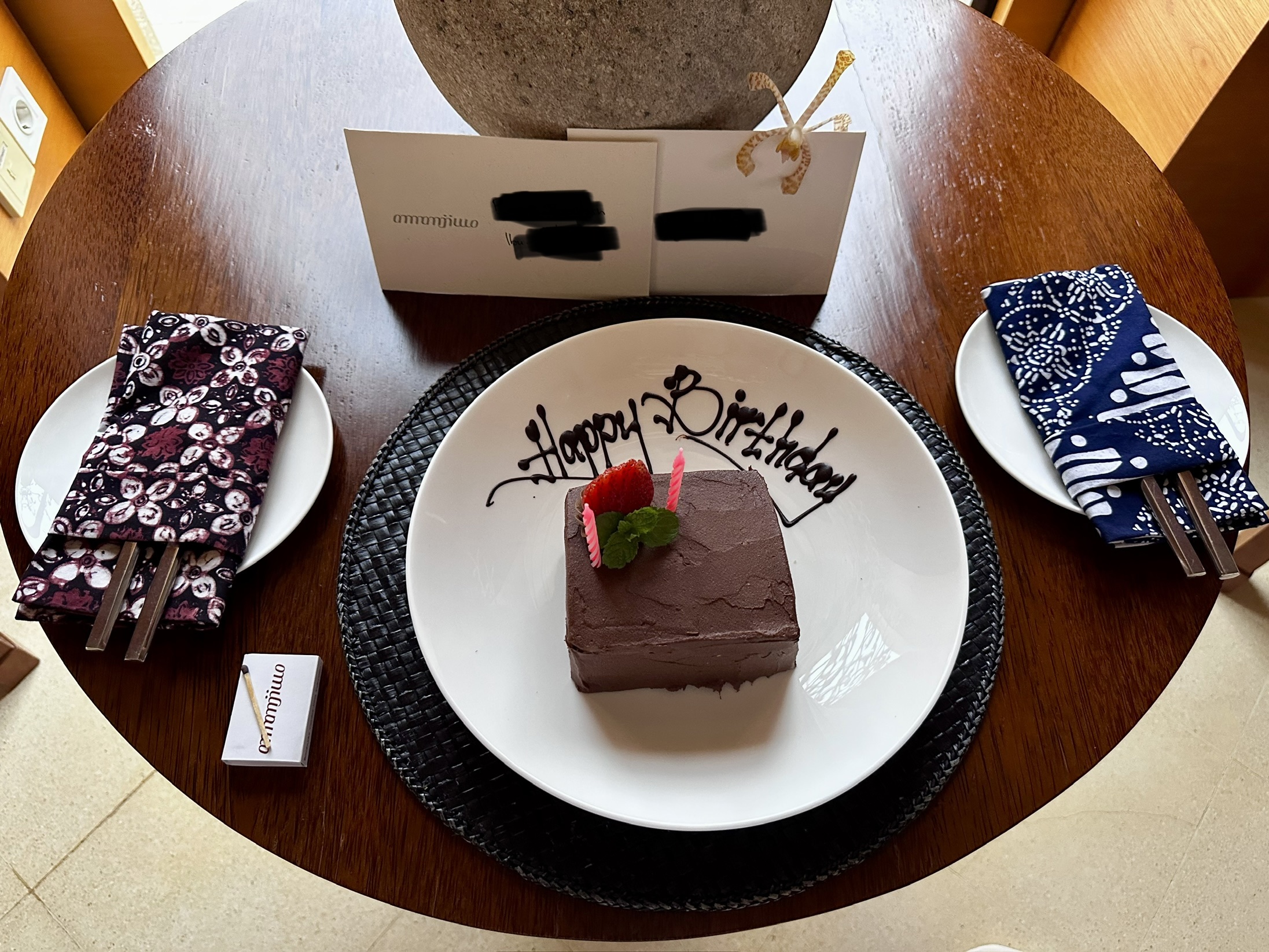
This matters most for celebrations, when a team wants to surprise you with a cake. We want to enjoy it. We’re also quietly wondering whether there are eggs in it, which is a deeply unsentimental thing to wonder while someone is singing to you. Only a handful of properties have proactively swapped our in-room snacks and treats for things we can actually eat. That’s the gold standard, and you can nudge toward it.
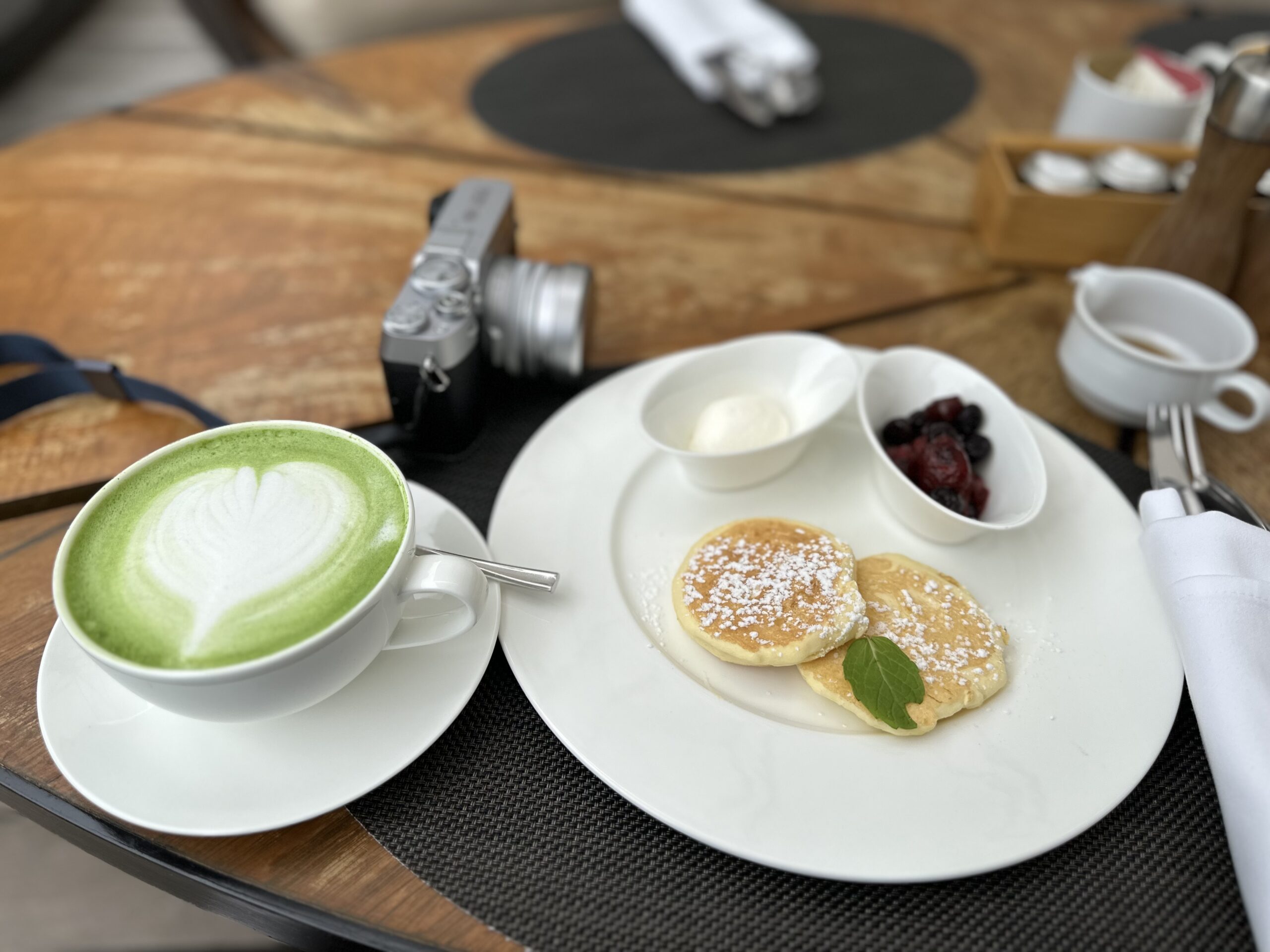
Then go talk to the breakfast team. This doesn’t have to take time away from vacation – you can do it at breakfast the next day but if you’re only there for a night then best to do it the night before. A friendly conversation has earned us vegan pancakes, local specialties made vegetarian, freshly baked egg-less pastries, and masala chai. None of this was on the menu, all of it made because we asked kindly and they were thrilled to. Breakfast teams are consistently the most generous people in hospitality.
The honest part: the logo guarantees nothing
The most useful thing we’ve learned is that a legendary brand name tells you very little. Execution comes down to the individual property, and really the individual team managing the show. The proof is in the contrast. Belmond’s Palacio Nazarenas and the Four Seasons Kuala Lumpur went genuinely above and beyond on in-suite experiences we still talk about (they aren’t the only ones). Other properties flying those same flags a few Four Seasons, including Tokyo, and Belmond’s Rio Sagrado weren’t nearly as mindful with us. Same brand. Completely different stay. We’ll cover this in more detail in the individual reviews.
(Teams change, so we hold this loosely and would happily update our notes. But it’s exactly why we never assume.)
Travel without assumptions. Send the email, build the rapport, confirm when you arrive for every property, every time.
It’s not just hotels
We send some version of this email before anything where someone else is deciding what we eat, which, on a good trip, is most things.
Luxury trains like Belmond’s Hiram Bingham in Peru. Tour operators running multi-day trips through remote places, where meals come with the itinerary and there is nothing else for a hundred miles (Salar de Uyuni in Bolivia comes to mind). Private yacht charters. Villa stays with a chef. All of them are the remote problem in miniature: a small kitchen, a fixed inventory, and no shop around the corner. A train cannot pull over for cheese.
The same email works. Send it to the operator, not just the hotel.
And this is the part worth internalizing: never be afraid to ask for what makes you comfortable. Not the food, not the pillows, not the champagne you’d rather not drink. Especially on vacations… you earned it and you’ve specifically paid to have a good incredible experience. Asking clearly isn’t demanding. It’s how good teams find out what makes their hospitality worth the money.
One last thing: close the loop
Hospitality teams want to make your stay unforgettable, and they rarely hear when they’ve succeeded. A word at breakfast, a mention to the manager, a post-stay email or review – it lands more than you’d think. It also makes the next guest with dietary needs that much more welcome.
You can’t control every variable on a trip. This is how you control the ones you can.
None of our reviews are sponsored. This is just what works, after a lot of trips and a few sad salads along the way.
Gallery